
The Unconventional Paths to Statehood
How churches, trading cities, companies, and communities acquired the power to govern—and what their histories reveal about trust and jurisdiction.

On this page
A community can organize a festival, run a school, or send help to its members. At some point, it may begin deciding matters for people who never joined it. A merchant company collects a farmer’s taxes. A religious official appoints the governor of a town. Two monarchies agree on the ownership of land across an ocean, without asking its inhabitants.
I came to these histories with a builder’s curiosity. Having started communities of my own, I wanted to know how far shared organization could go. The examples were irresistible: popes, trading cities, companies, migrating congregations. Some acquired territories and armies; others exercised considerable power without becoming countries. What, exactly, changed along the way?
The closer I looked, the less useful a founding date became. The change was often buried in a document: an appointment, a commercial privilege, permission to raise troops, a grant of revenue. Each altered a relationship between people. Someone acquired a new right to decide; someone else became subject to the decision.
These histories begin with the people and places on either side of that relationship. Together they suggest that a community’s passage into government is a change in whom it can bind, and on what terms. Its members may recognize its authority long before neighboring rulers do. Those rulers may recognize it without consulting the people it governs. And neither kind of recognition guarantees that an order will be carried out.
The church that became a territorial ruler
Rome, across the water
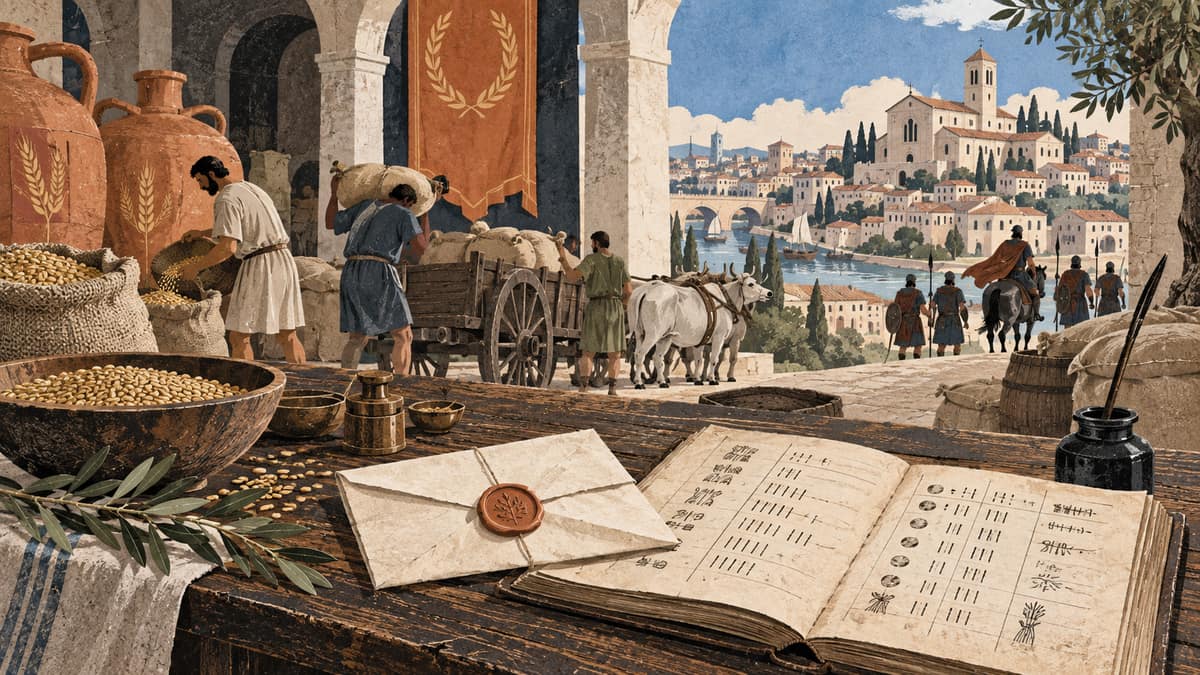
Sicily, around 590. A bishop lifts a letter toward the light. Beside him, a clerk waits to learn what Rome wants. The bishop reads as far as a name, Peter, then returns to the preceding sentence. This man will come bearing someone else’s authority. The bishop lowers the page. The clerk is still waiting.
How a bishop first read this letter, who stood beside him, and whether he paused over the appointment are beyond our knowledge; the scene is imagined. We do have the words sent to Sicily’s bishops by Gregory the Great, who became pope in 590. Gregory appoints Peter, a subdeacon, as his delegate on the island. He explains why:
our authority should be represented through him … where we cannot be present ourselves.
— Gregory, Register of Letters, book I, letter 1, in James Barmby’s translation.
The rest of the letter gives Peter and the bishops something to do. They are to assemble each year at Syracuse or Catania, attend to the churches’ affairs, and consider the needs of poor and oppressed people. Gregory establishes a representative, a meeting, and a scope of responsibility. Across the water, his instructions are meant to become someone else’s work. The letter records that intention; it leaves the recipients’ responses out of view.
Earlier Christian correspondence reveals a smaller apparatus. In Romans 16, Paul recommends Phoebe of Cenchreae and greets Prisca and Aquila, including the church meeting in their house. A person travels; others are asked to welcome her. By Gregory’s time, such networks existed within a church that owned estates and maintained an administration. Historian Carole Straw describes his papacy taking responsibility for food and water supplies, soldiers’ pay, negotiations, property, and charity. A grain supply has to arrive. A soldier expects payment. The work creates a continuing need for officials who can answer for what has been done.
The Papal States would emerge only in the eighth century. Between Gregory’s administration and that territorial government lay a peninsula divided by competing powers. Byzantine officials claimed imperial authority; the Lombards pressed against their remaining possessions. Across central Italy, from Rome toward Ravenna and the Adriatic, the papacy would come to claim rule over towns and their inhabitants. It already possessed land, but an estate owner’s rights were different from a sovereign’s.
To make the larger claim effective, the pope needed protection that his own administration could not supply.
The price of a protector
After the Lombard capture of Ravenna in 751, Pope Stephen II sought help from the Frankish king Pepin. Frankish campaigns in 754 and 756 forced concessions from the Lombards; the ensuing grants helped establish the territorial basis of papal rule. Paolo Delogu’s account also warns against treating the grants as a perfectly preserved founding document: the scope of the 754 promise is disputed, and the donation instrument associated with 756 is lost.
Pepin could help place towns under papal rule because he could compel the Lombards to yield. That advantage carried a danger. A protector powerful enough to secure the pope’s independence was also powerful enough to threaten it. The papacy’s territorial history would repeatedly return to this uneasy dependence.
Inside the claimed borders
Within the territory claimed by the pope, Roman aristocrats, town governments, and provincial lords continued to exercise power. A boundary on a map could conceal several competing answers to the question of who governed. Innocent III pursued territorial recoveries; by the early fourteenth century, the papal state had become one of Italy’s major territorial formations. Effective control still had to be negotiated or fought for locally.
The distance became greater during the Avignon papacy, when the papal court governed from outside Italy. Sent in 1353, Cardinal Gil de Albornoz combined military intervention with administrative reconstruction; his Aegidian Constitutions supplied a lasting framework. Then the Western Schism produced rival claimants to the papacy itself. Martin V, elected in 1417, had to renew the work of consolidation. Even the identity of the person entitled to issue an order could become contested.
Six leaves of paper, half a world
In 1494, a notary described a document as six leaves written on both sides, together with the page bearing names and his sign. The object was small enough to carry. Its subject was a boundary from the Arctic to the Antarctic, crossing an ocean and whatever islands or mainlands lay in its path. The document was the Treaty of Tordesillas.
To understand why a pope belongs in this scene, we need to go back to 1493. Christopher Columbus had returned from his first Atlantic voyage. Spain and Portugal were advancing competing claims to lands Europeans were only beginning to chart. In Inter caetera, dated May 4, 1493, Alexander VI set a demarcation one hundred leagues west and south of any of the islands called the Azores and Cape Verde. Those two archipelagos do not share a meridian, so the bull fixed its line by naming islands rather than by describing a point anyone could measure to. The grant favored the Spanish monarchs and drew on an existing practice of papal authorization for overseas expansion.
A pope whose control over Italian towns remained a practical struggle could nevertheless supply authority for claims across the Atlantic. Spain and Portugal had reasons to seek that authority, and reasons to bargain over its terms. On June 7, 1494, the crowns agreed at Tordesillas to move the line to 370 leagues west of the Cape Verde islands, with the eastern side assigned to Portugal and the western side to Castile. The familiar phrase “the pope divided the world” compresses a papal grant and a subsequent negotiation into a single act.
The treaty’s drafters also confronted the distance between a written agreement and a place. They proposed a joint expedition to locate the line. Where it crossed land, marks or towers would identify it. The boundary, in the English translation, was to be:
a perpetual mark and bound
— Treaty of Tordesillas, article 3.
The same treaty asked the pope to confirm the agreement. Papal authority and royal bargaining worked together, but the negotiated settlement differed from the papal grant. The westward shift allowed Portugal to claim Brazil’s coast, with consequences still visible in South America’s colonial inheritance. These were imperial claims, not a survey fixing the borders of today’s nations.
The imagined towers would stand on other people’s ground. The inhabitants of the lands being assigned were absent from the agreement’s named sovereign parties. Spain and Portugal could recognize one another’s claims, and seek papal confirmation, without obtaining the consent of those whose lives the settlement would affect. Recognition among rulers could travel much farther than consent among the ruled.
The Italian state and this wider religious authority occupied different geographies. One required governors in towns; the other could influence monarchs deciding how to justify an empire. Both belonged to the papacy, and neither can be measured simply by the acreage it possessed.
A pope goes on campaign
Twelve years after Tordesillas, Julius II personally led a campaign against Perugia and Bologna. Here the objective lay close to home: cities dominated by local dynasties were to come under effective papal control. Against Bologna’s ruler, Julius used excommunication and an interdict as well as military pressure. A spiritual sanction and an advancing army could serve the same territorial ambition.
The papacy had entered the Italian balance of power, and Julius’s alliances changed with his objectives. He joined the coalition against Venice associated with the League of Cambrai, then helped organize a Holy League against France. Catholic rulers remained competitors. The office that could authorize distant expansion also had to bargain over the security of its own cities.
The accounts, and the armies outside
The sack of Rome in 1527 exposed the state’s vulnerability. Thereafter it operated under the weight of Spanish predominance in Italy. The pope’s international religious standing offered no guarantee that his capital would be safe.
Inside the state, however, government became more elaborate. Sixtus V reorganized central administration in 1588. Four years later, Clement VIII established the Congregation of Good Government to supervise the finances of subject communities. Ferrara passed under direct papal rule in 1598, Urbino in 1631. Territorial consolidation and diminishing freedom of action abroad could occur together.
A town’s revenues and disputes now passed through institutions far removed from Gregory’s annual assembly. Cardinal legates, prelates, and subordinate governors exercised authority in the provinces. Central congregations handled executive and judicial business; the Congregation of Good Government reviewed revenues, taxation, and municipal disputes. Local privileges complicated the hierarchy, but its work was recognizable: appoint officials, examine accounts, decide cases, maintain armed force.
These routines made the state something its inhabitants encountered repeatedly. A papal claim might enter a person’s life through a municipal tax or a judgment, without any meeting with the pope himself.
Revolution, restoration, and the loss of Rome
From the end of the eighteenth century, European wars repeatedly remade that government. French intervention brought a Roman Republic in 1798, Napoleonic annexation in 1809, and restoration after Napoleon’s fall. In 1859–60, the papacy lost its northern and eastern provinces. Its remaining territory around Rome depended on French protection. When that protection failed in 1870, Italian troops took the city, and Italy annexed Rome.
The protector’s dilemma had returned. More than a millennium after Pepin, the papacy’s ability to hold territory still depended at a decisive moment on an outside army.
Its territorial state ended; its international role continued. The Holy See remained distinct from the later Vatican City, created by the Lateran settlement in 1929. The settlement secured a small territorial basis for independence without restoring the former provinces. The papacy could lose most of the ground it had governed and retain relationships that reached around the world.
That separation of territory from influence becomes even clearer when we leave Italy for the ports of northern Europe.
Two ways to organize the sea
The Hanse: the power to take your business elsewhere
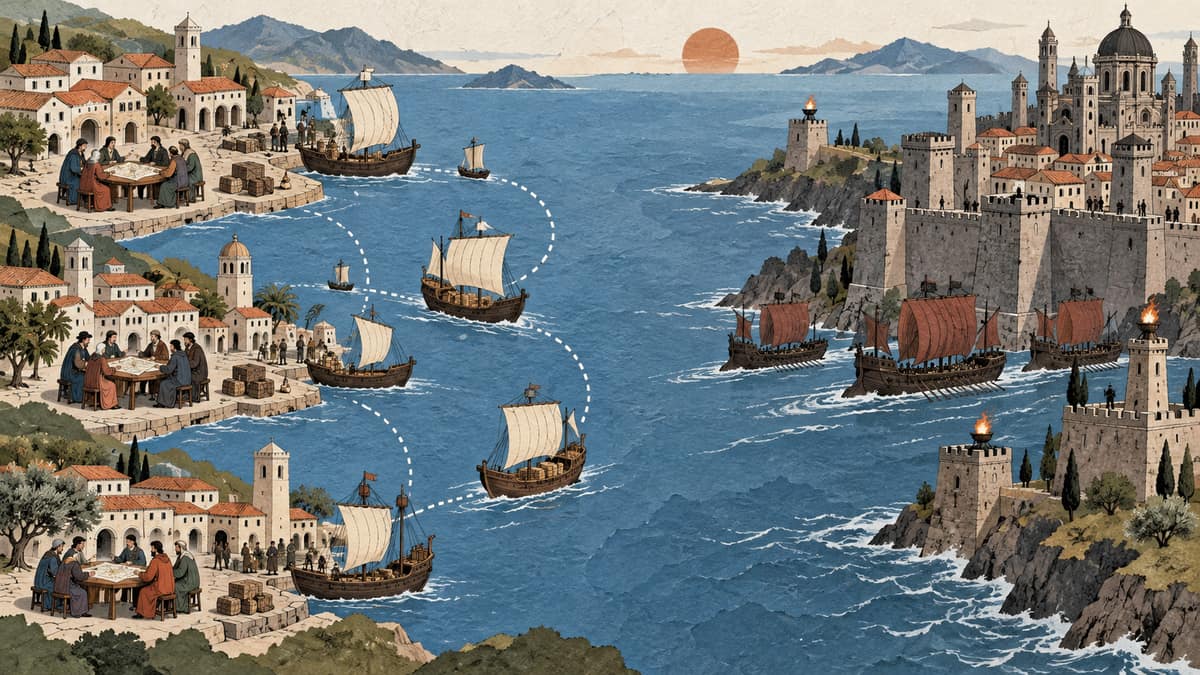
A merchant in medieval Bruges prepares to leave his lodgings. His host has helped arrange his business in the city. Now the visitor’s companions are taking their trade elsewhere. The host is losing a lodger and a client; the dispute that prompted the departure has reached his own income.
This particular farewell is imagined. The commercial relationship is documented: Hanseatic merchants in Bruges stayed with local hosts who also acted as brokers. When merchants judged their rights violated, they repeatedly withdrew to other towns until Bruges yielded. Departure worked as a political act because business could move with it.
From the twelfth century, the Hanseatic League developed across northern Europe’s Baltic and North Sea trading world. Merchants needed protection and favorable conditions in places ruled by other people. Their associations grew into cooperation among towns, with Lübeck occupying a central position. There was no single founding act that turned all these ports into one country.
Over time, town governments took a larger role and sent representatives to assemblies. The major foreign trading establishments, or Kontore, were in London, Bruges, Bergen, and Novgorod. Elected officers defended privileges, but each establishment’s position depended on its local setting and agreements. Law also moved along the network: Lübeck’s municipal law influenced other Baltic cities, spreading through individual towns rather than through a legislature governing the whole league.
By the fourteenth century, coordinated commercial interests could sustain war. A coalition formed against Denmark in 1367, including Hanseatic and non-Hanseatic towns alongside princely allies. The conflict ended in the Treaty of Stralsund in 1370. City archivist Dirk Schleinert emphasizes the commercial privileges restored by the settlement. The towns had fought a king and secured their objectives without needing to replace his monarchy.
The settlement makes the league’s purpose easier to see. Merchants needed access, protection, and reliable terms of trade. They could get those things by making a king honor privileges. Taking responsibility for his kingdom would have added obligations far beyond the business they had joined together to defend.
But the ability to act together had to be renewed. The league lacked regular central revenue, and its towns did not consistently cooperate. Territorial governments and competing commercial interests narrowed its influence in the sixteenth and seventeenth centuries. Its last historical assembly met in Lübeck in 1669; no formal dissolution followed. Where the papacy lost a capital, the Hanse lost the habit and usefulness of joint action. Its decline followed the form of its power.
Venice: the harbor with a government behind it
Farther south, at the head of the Adriatic, another commercial power learned to stay. Venice’s later fortifications on mainland approaches and maritime routes survive as evidence of the commitment. A cargo might move on. Walls, garrisons, and the people governed behind them remained.
The Republic of Venice grew out of a much smaller geography: settlements in the lagoon at the northern end of the Adriatic. UNESCO traces their beginnings to fifth-century refuge from mainland raids. Settlement did not immediately produce the later republic. Its political development was gradual, and early ties to Byzantium placed the lagoon within an existing imperial world.
Byzantine emperors granted Venetian merchants commercial privileges in the tenth and eleventh centuries. Around 1000, Pietro II Orseolo negotiated imperial privileges and led an expedition along the Dalmatian coast. He was already doge. Here the fleet carried the authority of a government based in a particular city, rather than a temporary agreement among several town governments.
Expansion could be destructive. In 1204 the Fourth Crusade sacked Constantinople, and Venetians shared in the spoils. The republic’s commercial history includes the capture and redistribution of wealth by force, alongside negotiated access to markets.
Over the following centuries, the republic accumulated responsibilities on land and at sea. Its Stato da Mar comprised maritime dominions; its Stato da Terra was mainland territory. The surviving sixteenth- and seventeenth-century defenses protected landward approaches and sea routes toward the Levant. They belong to a much later stage than Orseolo’s expedition, when a government based in the lagoon had possessions to hold across several landscapes.
Commercial relationships also crossed religious divisions. Venice traded with Mamluk, Ottoman, and Safavid societies; its history cannot be reduced to Christian fleets fighting Muslim ones. The republic’s long independent existence ended with Napoleon’s conquest in 1797. A government sustained for centuries by trade, territorial rule, and diplomacy could still be brought down by a European war.
A map can make the two systems look alike: a scattering of ports joined by routes. Their obligations were different. Hanseatic merchants often sought protected access under someone else’s government. Venice extended a government’s reach. The chartered companies of a later age would make the relationship more difficult to separate, sending merchants abroad with powers that included the right to wage war.
When trading companies governed
Britain’s East India Company: the trader becomes a tax collector
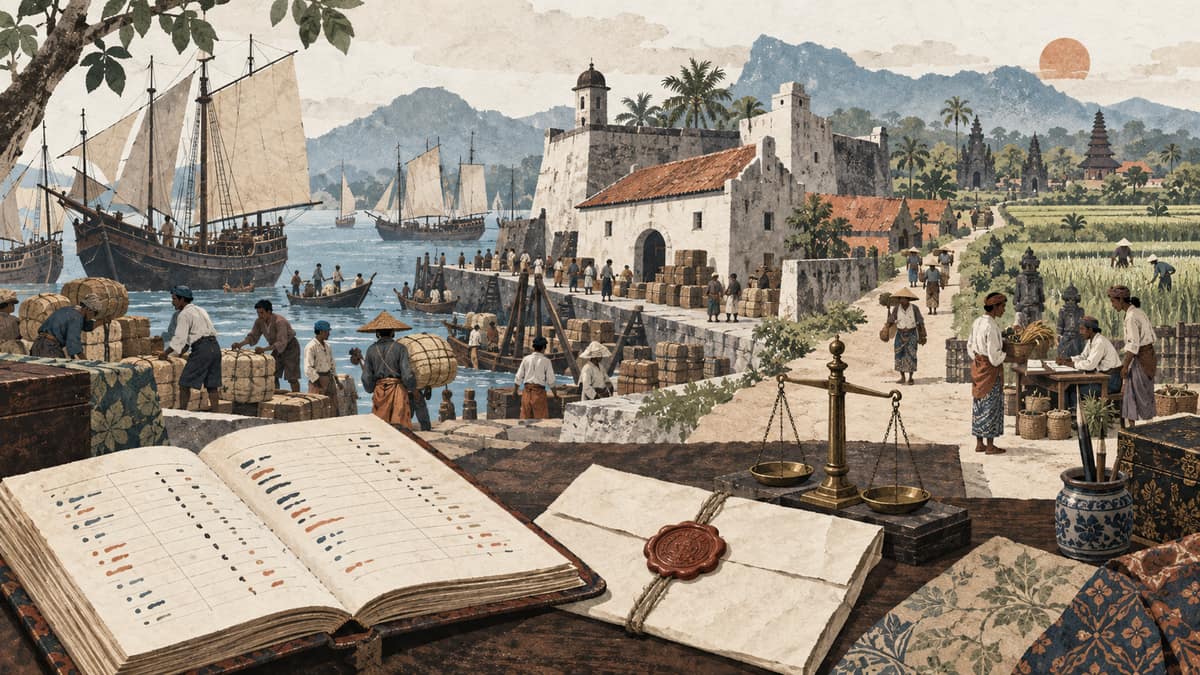
When a company ship sailed for Europe, the factor stayed behind. He had goods to sell and a return cargo to arrange for a later voyage. The East India Company’s factory system rested on these agents and their dealings with local merchants. A factory was a trading establishment. Much depended on what its factor could persuade another person to buy or supply.
The East India Company entered this world with a royal charter issued in England in 1600, which granted a monopoly over English trade across the whole of Asia and the Pacific. The company initially pursued Southeast Asian spices; Indian textiles and goods from China became important parts of its business. London could exclude English competitors through a charter. That did not give its agents sovereignty over the Asian societies where they needed to buy and sell.
The directors elected by shareholders in London sent instructions aboard ships to councils overseas. Like Gregory, they needed people elsewhere to act in their name. Their early arrangements concerned commercial transactions in markets whose rulers and merchants had interests of their own.
Then European war and Indian political struggles changed what the company could do. British-French warfare spread to India in the mid-1740s, accelerating its development as a military power. Before the Battle of Plassey in 1757, Robert Clive and the Jagat Seth banking family agreed to support Mir Jafar as nawab if Siraj-ud-Daulah were defeated. About 2,100 of Clive’s roughly 3,000 men were Indian sepoys. Company power in Bengal depended on Indian soldiers, finance, and political allies.
In 1765, the Mughal emperor granted the company the diwani, the right to collect revenues in Bengal, Bihar, and Orissa. The company’s claims now reached beyond goods offered for sale to the agricultural revenues of an inhabited territory. People who had never chosen to trade with it owed payments under its administration. Those revenues could support troops and further expansion. Commerce had helped bring the company to Bengal; government gave it a different way of financing its presence.
The company could acquire authority over taxpayers while losing freedom from supervision at home. After its financial crisis, Parliament intervened in 1773 with a loan and a regulating act. The India Act of 1784 created a Board of Control to supervise Indian affairs. Shareholder ownership persisted inside an increasingly elaborate relationship with the British state.
The ending came in stages. Parliament wound up its commercial operations with the Charter Act of 1833, whose provisions took effect the following April; the company went on governing. After the rebellion of 1857, Parliament transferred its administrative powers, possessions, and armed forces to the Crown in 1858. The corporation itself survived until dissolution in 1874. Its commercial life, territorial government, and legal existence ended at three different times.
The Dutch VOC: a monopoly backed by soldiers
Another company’s correspondence brings the consequences closer. On May 6, 1621, Jan Pieterszoon Coen reported to the Dutch East India Company’s directors from the campaign on Banda. His letter survives in the Dutch National Archives, alongside an account of the killings, enslavement, and forced removal. The destruction of island communities entered the company’s records as business for its directors to consider.
The Banda Islands, in the Indonesian archipelago, were part of an existing spice-trading world. Islanders traded with several buyers and resisted the company’s demands. A monopoly that looked orderly in a company’s plans meant something very different to people being told whom they could sell to.
The Dutch East India Company, or VOC, had been formed in 1602 by combining earlier Dutch ventures. Competition among those ventures gave way to a chartered organization able to coordinate voyages on a larger scale. It still entered markets with Asian merchants, rulers, and European rivals already present.
Its capacity to use force was built into the legal arrangement. The States General authorized the company to make treaties, build forts, administer justice, hire troops, and wage war. These powers accompanied its exclusive Dutch trading privilege. The company did not have to invent a legal justification for every governmental function from scratch; a government had delegated them.
In 1619, the VOC established its Asian headquarters at Batavia, on the site of Jakarta after its destruction. From there, commerce and territorial administration were connected through councils, ships, and armed force. The company’s reach varied by place. A trading agreement with one ruler did not confer the same authority as conquest elsewhere.
In Banda, the company’s desired exclusivity collided with islanders’ continuing trade with other buyers. Its answer in 1621 was conquest. The directors’ chartered privileges and the inhabitants’ freedom to choose trading partners could not both be exercised on the company’s terms. Coen’s correspondence records how that conflict was pursued by force.
The VOC endured for nearly two centuries after its foundation. Competition, war, and declining profits weakened it. In 1799, it was dissolved and its possessions and debts passed to the Batavian Republic. Colonial rule continued under a different organization. For the people governed, the disappearance of a company name did not necessarily mean the disappearance of the authorities controlling their lives.
These companies complicate the idea that a state must first exist as a unified thing before it can govern. Powers were granted, acquired, supervised, and transferred separately. The company could lose its trading business while keeping its government, or disappear while colonial rule continued. From the governed person’s side, the consequential question was who now held the claim over a tax payment, a crop, or a place to live.
Belief, migration, and the people already there
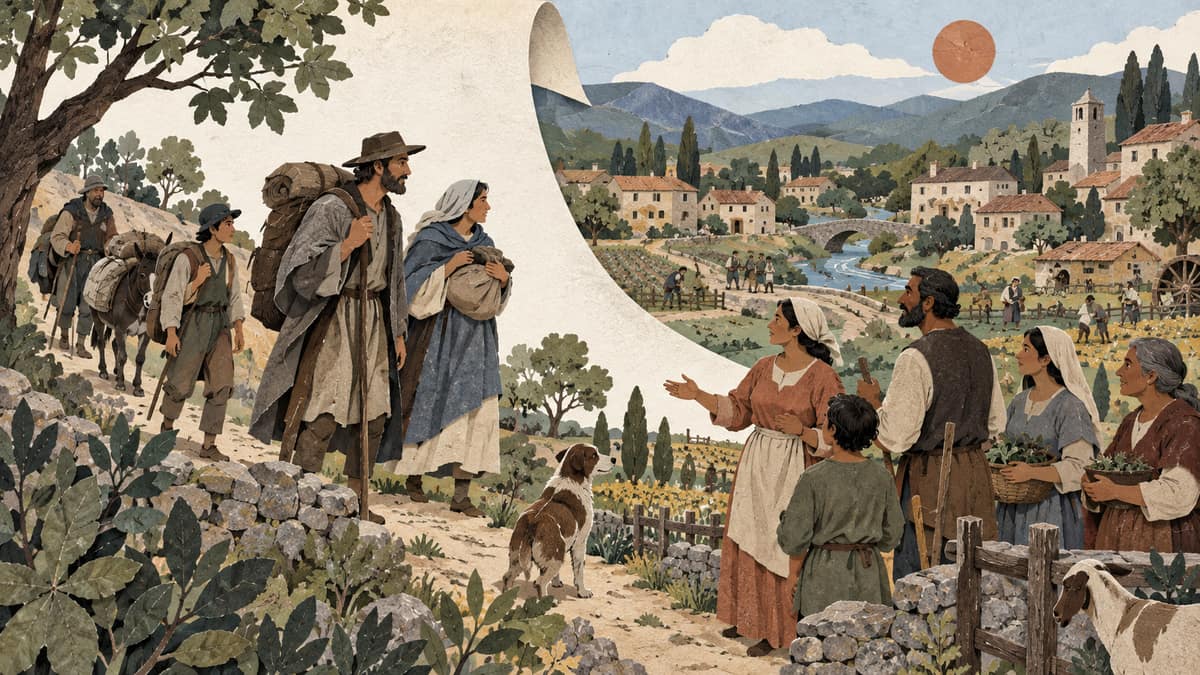
A printed form, a faith, and a right to leave
A printed indulgence in Cambridge University Library contains a small meeting of the general and the particular: standardized words, with blanks filled in for an individual recipient. An institution could reproduce the form and attach its promise to a person. Printing served established religious authority as well as the arguments directed against it.
The Reformation unfolded in sixteenth-century Europe among existing principalities, bishoprics, and cities. Within the Holy Roman Empire, arguments about faith quickly encountered the authority of territorial rulers. A text could cross a border more easily than its reader could change the government on the other side.
The Peace of Augsburg, agreed in 1555, recognized Catholic and Lutheran imperial estates while excluding other confessions. With exceptions, it placed the choice of a territory’s religion in the hands of its ruler. Section 24 addressed subjects wishing to move with their families. They were to be permitted:
to sell their goods and possessions
— Peace of Augsburg, §24, English translation published by the German Historical Institute.
The surrounding text concerns wives and children, arrears, and payment for release from obligations. A provision for religious difference thus reaches into a household’s possessions. To exercise the right, someone may have to sell the things that make departure possible and the things that make staying desirable.
Augsburg regulated religious difference within an existing empire. The later migration considered here arose from its own circumstances, rather than from this settlement. But it returns us to the household’s difficulty: sharing a faith with others does not ensure that any government will make room for the life the community wants to lead.
The Latter-day Saints: the ditches came before recognition
In the Salt Lake Valley in July 1847, irrigation ditches were being dug and crops planted before Brigham Young arrived. The advance party had already begun the work. More migrants would follow. Before the settlement could ask what government it would become, it had to produce food.
The Latter-day Saints had arrived through a succession of upheavals. They had suffered violent expulsion in Missouri; Joseph Smith had been killed. The first wagons left Nauvoo, Illinois, across the Mississippi in February 1846. They traveled through Iowa and Winter Quarters on the Missouri before the 1847 journey to the Great Basin.
Young had gathered information about western routes and organized an advance company. Supplies, route knowledge, and coordinated labor made the movement possible. These were capacities a religious community could develop before any outside government recognized a state of its own.
But the valley was already part of other people’s lives. Historian David Rich Lewis places the first settlement in a zone of joint Ute and Shoshone use, where it caused little immediate disruption. The pressure came as settlement spread south along the Wasatch Front and settlers began competing with Utes for the scarce resources of those oasis environments; raiding, the Walker War, and later federal reservation policy followed. The irrigation ditch was a means of survival for an arriving family; the expansion it made possible threatened the livelihoods of people who were already there.
The settlers proposed the State of Deseret. Congress did not approve it. Instead, it established Utah Territory in 1850, placing the community within a federal territorial structure. Young became its first governor, while church leaders exercised influence over political nominations. Religious leadership and territorial office overlapped, but the United States retained authority over the territory.
That arrangement produced a long struggle over the conditions of self-government. Federal opposition centered on church political power and plural marriage. Organizing a successful migration and building settlements had not settled the question of who could make the final rules.
In 1890, Wilford Woodruff’s Manifesto changed the church’s official position on plural marriage. The subsequent constitutional process culminated in Utah’s admission on January 4, 1896. Here state meant a member of the United States, not an independent country. The destination was negotiated participation in a federation, reached after decades of pressure and accommodation.
The ditches, towns, and political nominations show how much the community could organize for itself. Congress’s decisions show where that capacity met another authority. Indigenous dispossession shows what the settlement could mean to people outside both the settlers’ institutions and the negotiations over their admission. There was no single community whose consent answered for everyone in the valley.
Living with the constitution
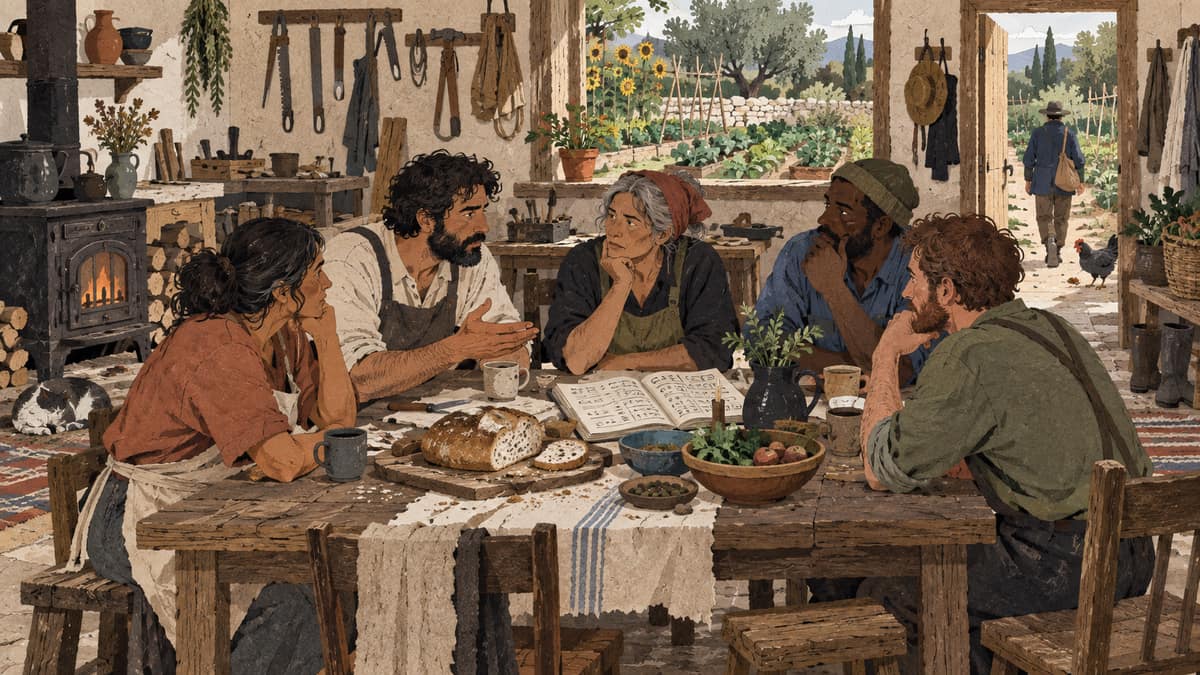
New Harmony: buying the town was the easy part
For Robert Owen, a new society began with the purchase of an old one. In 1825 he bought a settlement on the Wabash River in southwestern Indiana. The Harmony Society, German religious separatists led by George Rapp, had built their communal town there from 1814. Buildings and productive infrastructure could change owners together. The habits and agreements needed to sustain a community could not be conveyed so easily.
An industrial reformer concerned with class and education, Owen wanted a different social life to grow in New Harmony. With William Maclure, he brought educators and scientists to the settlement. Existing buildings made it possible to begin quickly.
The experiment struggled to support itself and depended on its backers’ money. Disputes about work, authority, and rules divided the inhabitants. Members began splitting away in 1826, and the communal undertaking broke down within roughly two years. Educational work survived, as did the town. What failed was the attempt to organize its inhabitants under a shared communal scheme.
Owen had secured a place and attracted people to an ambition. Their subsequent disputes concerned the authority to arrange everyday life. The difficulty remained even where the scale was small enough for members to encounter one another directly.
The North American Phalanx: who cleans the stalls?
Bread had to be made, and animal stalls had to be cleaned. At the North American Phalanx, the less attractive task could pay more: the National Park Service’s account describes higher compensation for cleaning stalls than for making bread. The pay rule gave a material answer to a question that shared enthusiasm could not settle indefinitely.
The community began in Monmouth County, New Jersey, in 1843. An association inspired by Charles Fourier acquired land and sent the first families to prepare it for the larger group. Unlike Owen’s purchase of a built town, this was a staged establishment.
The Phalanx used joint-stock ownership. Agricultural work was divided into groups, and compensation reflected the usefulness and unpleasantness of the task. Families had separate apartments and shared meals. Its arrangements remained within the surrounding American economy and legal order; communal ambition did not require sovereign independence.
The experiment lasted longer than Owen’s, and it ended by stages rather than at once. A fire destroyed the community’s mill in 1854, leaving debts it had no means of repaying; the stockholders voted in June 1855 to liquidate, the land was surveyed and auctioned that October, and the Phalanx was formally terminated in January 1856. Proceeds went to settle debts, and what remained was distributed among the shareholders. The community ended through a collective decision about how to honor claims when its common life could no longer continue.
These experiments bring the question of government down to the scale of a meal, a day’s labor, or a decision to leave. Who does the unpleasant work? How are contributions valued? What happens when people disagree about whether someone is contributing enough? Can a departing member take anything with them?
The Phalanx could use a recognized business form within the United States to pursue an unusual way of life. It did not need to become a sovereign country to make consequential rules for its members. Nor did agreement to join ensure that those rules would remain acceptable forever. Authority had to survive the ordinary repetition of work, payment, disappointment, and disagreement.
Who is bound by the decision?
The founders in these stories did not all want the same thing. A merchant wanted reliable access to a market; a migrant community wanted a secure home; a reformer wanted to change the terms of work and daily life. Some organizations gained territory almost as an extension of their activity. Others sought it by force. Several exercised the powers that interested me without ever becoming sovereign states.
The documents make those differences unusually clear. Gregory’s letter appoints someone to act in his absence. The Hanse defends privileges in places its members do not govern. A charter authorizes a company to raise troops; a revenue grant connects its survival to people who have never been its customers. At Tordesillas, two monarchies define claims over people absent from their agreement.
What changes is the circle of people reached by a decision. A rule for members can become a rule for inhabitants. Recognition by a neighboring power can strengthen a ruler without giving the ruled any greater say. An institution may be able to make a decision effective and still lack a defensible right to impose it.
This is also why “trust” is an incomplete explanation of these histories. Trust helps people coordinate, but armies, revenue, property, and dependence can make authority effective when trust is absent. The company directors’ confidence in their arrangements tells us little about whether a Bandanese trader accepted them. Understanding how a governing institution works requires following the decision all the way to the person who must live with it.
The problem I brought home
I have come to these questions from several places within community life. I founded ZaiGeZaiGu (ZGZG), a cultural nonprofit community, and DotLift.org, a nonprofit developer community. I have also contributed to communities such as Wikipedia, and belong to the alumni communities of Tsinghua University and Johns Hopkins University. In some of these communities I helped build the organization; in others I joined something that was already there, with its own history and ways of doing things.
Those different relationships make the practical questions in these histories feel familiar, even at a much smaller scale. What gives someone a voice in a community: helping to establish it, contributing to its work, or sharing a past with its members? Who takes responsibility, and who gets recognized for it? When someone makes a decision on the community’s behalf, what makes the rest of us accept that they can speak for us? I find myself returning to these questions as a co-founder, a contributor, and an alumnus, with a different stake in the answer each time.
These experiences sit behind my fascination with building digital trust and with the social construction of jurisdiction. A system can specify who is entitled to do something. People still have to recognize the entitlement, understand its scope, and decide how to respond when it is exercised. Sometimes the people granting recognition and the people bearing the consequences are different groups.
One technical effort of mine is ERC-5485: Jurisdiction, Accreditation, and Enforcement. It proposes a standard way for smart contracts to express the jurisdiction they observe, their accreditation, and how they receive enforcement proposals. The distinction between declaring allegiance and being recognized by an authority is built into the proposal. A contract’s declaration does not cause the named authority to accredit it, any more than writing a claim into a founding document ensures that outsiders will recognize it.
Enforcement introduces another relationship. The interface allows an implementation to record, reject, or act on a proposal; receipt does not guarantee execution. As of this revision, ERC-5485 remains in Review. Its aim is to make these institutional relationships expressible in code. The authority behind them still has to come from somewhere.
The history we carry in our heads often arrives through the country we grow up in: its classrooms, museums, monuments, and commemorations. In the twenty-first century, the nation-state is so familiar a framework for political life that it can seem like the natural destination of history. The people who write curricula, curate collections, and tell national stories help shape what we understand a state to be. As scholarship on nationalism and historical writing shows, the histories through which we understand nations have themselves been closely involved in building them.
Seen through that frame, other political forms can slip out of view. Some are forgotten; some are deliberately minimized or erased; others survive as curiosities, given little weight in the story of how the present came to be. Work on memory and the nation draws attention to the alternative stories and identities that national self-understanding can leave behind. Looking again at the institutions in this essay brings some of those possibilities back into view.
Taken together, these histories show how many different roads can lead toward statehood. A church becomes a territorial ruler. Merchants build institutions to protect their trade. A company acquires armies and the power to tax. A migrating congregation builds settlements and seeks recognition for a new political community. Some of these paths produce states; others lead to forms of authority that remain difficult to fit into that category. There is no single, straight line along which a community becomes a country.
Some of these stories are steeped in blood and tears, in injustice and the refusal to submit to it; reading them, I find myself moved by people’s courage, grieving what was lost, and sharing something of both their hopes and their bitter disillusionment.
For me, tracing these paths makes the idea of the state as a social construct more concrete. Statehood takes shape through relationships among people: those within a group who build institutions, accept or contest their authority, and come to see themselves as a political community; and those outside it who recognize its representatives, negotiate with it, dispute its claims, or refuse to acknowledge it. These judgments accumulate across generations and can change. A founding declaration is one moment in that process, whose outcome its authors cannot determine alone.
Calling the state a social construct does not make its borders, laws, or armies any less consequential. Nor does it imply that everyone has an equal voice in deciding what counts as a state. These histories are full of conquest, exclusion, and recognition granted by powerful outsiders over the objections of people living within the claimed borders. Yet even in those unequal relationships, statehood depends on people sustaining, enforcing, and recognizing a particular political order. Whether a group comes to be treated as a state is shaped by people both inside and outside it, often through prolonged disagreement about who belongs, who rules, and whose recognition matters.
That is what connects these histories to my interest in communities and digital trust: the process by which people give institutions a shared meaning and accept—or challenge—the authority attached to them. I return to the bishop holding Gregory’s letter. The page carries an instruction from Rome. Its place in the history of a state depends on what countless people, near and far, make of such claims over time. The state emerges through those relationships, and its future remains bound to them.
Sources and further reading
The research, historical expansion, and narrative revision were conducted on September 17, 2026. Wikipedia links in the narrative offer background reading; claim-specific links lead to the source entries below. Historical comparisons and judgments are the author’s interpretation. The bishop reading Gregory’s letter and the departing Bruges merchant are imagined scenes, identified immediately after each passage. Other documentary details are sourced; no invented dialogue is presented as a quotation. The illustrations are conceptual artwork, not historical reconstructions. Archival snapshots could not be verified because the archive service was unreachable; the links below point to the originals.
The citations were then re-checked against the sources on September 17, 2026. Every quotation was confirmed word for word, and no dated or numerical claim in the narrative was found to be wrong. Five entries were tightened where the essay had been looser than its source: the wording of the 1493 demarcation, the date on which the East India Company’s trade actually stopped, the Salt Lake Valley passage, the North American Phalanx’s dissolution chronology, and two citations that had been described more broadly than the cited pages support. Where sources disagree — on Venice’s founding, on the year of the Phalanx fire — the entries below now say so instead of picking a side silently. One cited host, Cambridge University Library’s exhibitions site, was unreachable during the re-check; that entry records what could and could not be confirmed.
Early Christian correspondence. Romans 16, New American Bible, USCCB edition, verses 1–5. The chapter’s textual notes discuss questions about its transmission; the essay uses the named recommendations and household gathering, not a claim about a unified early church government. Fetched 2026-09-17.
Gregory’s administration. Gregory the Great, Register of Letters, book I, letter 1, to the bishops of Sicily, translated by James Barmby, Nicene and Post-Nicene Fathers, second series, volume 12 (1895), hosted by New Advent. Opening appointment paragraph, including “our authority should be represented through him” and “where we cannot be present ourselves”; subsequent paragraphs prescribe the annual assembly and attention to poor and oppressed people. The scene of a bishop reading is imagined, not recorded in this letter. Fetched 2026-09-17.
The material responsibilities of the papacy. Carole Straw, Gregory the Great: Perfection in Imperfection, publisher’s excerpt, University of California Press, introduction, printed p. 5 (PDF p. 5), paragraph beginning “As pope.” Fetched 2026-09-17.
Stephen II, Pepin, and territorial rule. Paolo Delogu, “Stefano II, papa”, Dizionario Biografico degli Italiani, volume 94 (2019), Treccani. See the narrative from Ravenna’s fall through the 754 and 756 campaigns, the discussion of Quierzy, and the distinction between church property and the emerging res publica. The exact scope and documentary basis of the grants require caution. Fetched 2026-09-17.
Rome in 1870. U.S. Department of State, Office of the Historian, “Papal States”, section “Incorporation of Rome into the Kingdom of Italy, 1870.” Fetched 2026-09-17.
Vatican City and the Holy See. Vatican City State, “Origins and characteristics”, opening discussion of the Lateran Treaty — stipulated 11 February 1929, ratified 7 June 1929 — and the state’s “personality as Sovereign entity under International Law, separate from the Holy See.” On the interruption in diplomatic relations rather than the 1929 settlement, which it does not cover: U.S. Department of State, Office of the Historian, “Holy See”, which records consular relations from 1797 to 1870 and the resumption of formal recognition in 1984. Fetched 2026-09-17; re-verified and the second citation re-scoped 2026-09-17.
The Hanse’s development. Union of Cities THE HANSA, “The medieval Hanseatic League”, sections on merchants, towns, trading posts, and assemblies. A modern heritage organization’s overview, used for basic institutional description. Fetched 2026-09-17.
Trading establishments. Union of Cities THE HANSA, “Die Kontore”, opening description of elected officers and the Bruges section, including accommodation with local hosts and withdrawal to other towns. Fetched 2026-09-17.
Municipal law. Union of Cities THE HANSA, “Die Anfänge”, section “Stadtgründung Lübecks,” which describes the citizens developing their municipal law on the basis of Soest law, “later adopted as ‘Lübisches Recht’ by more than 100 cities in the Baltic region.” The page attributes the law to the townspeople, not to a council legislating for the league. Fetched 2026-09-17; re-verified 2026-09-17.
The 1370 settlement. Dirk Schleinert, “Der Stralsunder Frieden”, Stralsund City Archives. See the Confederation of Cologne in 1367, allied rulers, and the concluding explanation of why commercial concessions met the cities’ aims. Fetched 2026-09-17.
Venice around 1000. Giuseppe Gullino, “Orseolo, Pietro II”, Dizionario Biografico degli Italiani, volume 79 (2013), Treccani. See his election in 991, imperial agreements, and the Dalmatian expedition. The entry notes an alternative dating of the expedition to 998. Fetched 2026-09-17.
Constantinople in 1204. Metropolitan Museum of Art, “The Crusades (1095–1291)”, paragraph on the Fourth Crusade and the dispersal of booty. Fetched 2026-09-17.
The later maritime dominion. UNESCO World Heritage Centre, “Venetian Works of Defence between the 16th and 17th Centuries: Stato da Terra – Western Stato da Mar”, “Brief Synthesis” and criterion (iii). These surviving defenses are much later than Orseolo’s expedition and do not document an unchanged territorial network across those centuries. Fetched 2026-09-17.
The English company’s charter, organization, and revenues. Margaret Makepeace, British Library, “A Brief History of the English East India Company 1600–1858”, Qatar Digital Library (2014). See the opening charter paragraph, “Factories,” and the discussion of the 1765 diwani under “From Trading Company to Military Power.” Fetched 2026-09-17.
Plassey and the company’s allies. National Army Museum, “Battle of Plassey”, sections “Regime change” and “The armies,” on the Jagat Seth family, Mir Jafar, and the composition of Clive’s force. Fetched 2026-09-17.
Parliamentary supervision. UK Parliament, “Parliament and the East India Company”, discussion of the 1772 financial crisis, 1773 Regulating Act, and 1784 India Act. Fetched 2026-09-17.
The end of trade and company government. UK Parliament, “East India Company and Raj 1785–1858”, passages on the 1833 charter, the 1857 rebellion, the Government of India Act 1858, and dissolution in 1874. On the commercial ending: Margaret Makepeace (above) writes that the company’s commercial operations were “wound up completely by the Charter Act of 1833,” and the Act — retitled the Saint Helena Act 1833 and also known as the Government of India Act 1833 — commenced on 22 April 1834, which is when the China and tea monopoly actually lapsed. The essay dates the decision to 1833 and the effect to the following April rather than collapsing the two. Fetched 2026-09-17; re-verified 2026-09-17.
The VOC’s delegated powers. Nationaal Archief, “VOC: Verenigde Oost-Indische Compagnie (1602–1800)”, introductory description of the 1602 company, its trading privilege, and its powers to conclude agreements, build forts, administer justice, hire troops, and wage war. Fetched 2026-09-17.
Batavia and territorial administration. Rijksmuseum, “The Dutch East India Company (VOC)”, introductory paragraphs on delegated governmental powers, Jakarta’s destruction, and Batavia as headquarters from 1619. Fetched 2026-09-17.
The conquest of Banda. Nationaal Archief, “Hoe ging het verder op Banda?”, section “Genocide op Banda (1621)” and the reproduced letter of Jan Pieterszoon Coen to the directors, May 6, 1621 (VOC archive 1.04.02, inventory 1073). The essay does not reproduce disputed casualty estimates. Fetched 2026-09-17.
Print and established authority. Cambridge University Library, “Two indulgences”, Remembering the Reformation, discussion of rapid reproduction, uniform documents, and fill-in blanks; objects CUL Broadsides B.53.2 and B.53.3. The page describes B.53.2 as a well-preserved printed indulgence showing how print allowed rapid large-scale reproduction of uniform documents with room for adaptation, “as demonstrated by the filled-in blanks in this example,” while B.53.3 survives as binding waste in a copy of Erasmus’s Lingua. Fetched 2026-09-17. Link status: on re-verification the same day, the host exhibitions.lib.cam.ac.uk was unreachable (DNS resolved; port 443 refused connections) while the library’s main site responded normally, so this appears to be an outage rather than a withdrawn page. The wording above was confirmed against the page’s indexed text, not a fresh retrieval, and the Internet Archive was itself offline and could not supply a snapshot. Cambridge University Library holds comparable printed confraternity letters in its digital library, for example Broadsides.B.52.2-3, a letter of confraternity printed in Cambridge by John Siberch around 1522.
Religion and emigration. “The Religious Peace of Augsburg (September 25, 1555)”, German History in Documents and Images, German Historical Institute. See the editorial introduction and §§15–17, 24, and 27; §27 records exceptions for coexistence in certain imperial cities. The quotation “to sell their goods and possessions” is from §24, in Emil Reich’s translation revised and supplemented by Thomas A. Brady Jr. Fetched 2026-09-17.
The 1847 migration. U.S. National Park Service, “The 1847 Trek”, Mormon Pioneer National Historic Trail. See the preparation for departure, the Missouri recollection, and the July arrivals in the Salt Lake Valley. Fetched 2026-09-17.
Deseret, territory, and statehood. Utah State Archives, “Utah Territory Project”, historical introduction on the proposed State of Deseret, the 1850 territory, federal oversight, and 1896 statehood. Fetched 2026-09-17.
Indigenous inhabitants and dispossession. David Rich Lewis, “Ute Indians”, Utah History Encyclopedia (1994), reproduced by Utah History to Go. Lewis writes that “the initial Mormon settlement in the Salt Lake Valley occurred in a joint occupancy zone between Utes and Shoshones, and therefore caused little immediate disruption,” and that competition for “the scarce resources of these valuable oasis environments” came as settlers moved south along the Wasatch Front, followed by Wakara’s raids, the Walker War (1853–54), Garland Hurt’s Indian farms, the Uintah Valley Reservation (1861), and the Black Hawk War (1863–68). The essay follows that sequence rather than implying immediate displacement in the valley itself. The Ute account does not stand for every Indigenous people’s history. Fetched 2026-09-17; re-verified 2026-09-17 against the Utah History Encyclopedia text as reproduced in PDF by Utah Agriculture in the Classroom, the History to Go host having served a bot-verification interstitial.
Owen and Fourier-inspired communities. U.S. National Park Service, “Secular Utopias in America”, sections on New Harmony and the North American Phalanx. The essay distinguishes the communal experiments from the educational institutions and other activities that survived them. Fetched 2026-09-17.
Territory before papal sovereignty. Catholic Encyclopedia, “States of the Church”. “Patrimony of St. Peter,” especially “Political position of the papacy” and “Collapse of the Byzantine power in central Italy.” An early twentieth-century Catholic reference with an explicitly confessional interpretation; used here for the institutional and geographic outline, not its judgments about peoples or religions. Fetched 2026-09-17.
Medieval consolidation and the Italian balance. Treccani, “Stato della Chiesa,” Dizionario di Storia (2011). Paragraphs beginning “Ma solo le terre,” “Dopo la grave minaccia,” “Nel 1278,” and “Divenne così dal 1454 al 1494”: contested possession, Innocent III, provinces, and the fifteenth-century balance of power. Fetched 2026-09-17.
Albornoz and renewed consolidation. Catholic Encyclopedia, “States of the Church”. “States of the Church,” paragraphs on Avignon, Albornoz (sent in 1353), the Aegidian Constitutions, the schism, and Martin V. Cross-check: Treccani’s “Stato della Chiesa,” paragraphs beginning “Infine il cardinale” and “Martino V.” Fetched 2026-09-17.
Julius II as a military and diplomatic ruler. Michael Ott, “Pope Julius II,” Catholic Encyclopedia (1910). Paragraphs on the 1506 Perugia–Bologna campaign, the deposition and excommunication of Bentivoglio, and the subsequent Venetian and French alliances. Used for the events, not its praise or condemnation of individual rulers. Fetched 2026-09-17.
The papal demarcation of 1493. Sebastian Modrow and Melissa Smith, introduction to Inter Caetera. Introduction, paragraphs on the earlier papal grants and the second bull dated May 4, 1493. The bull’s wording is “one hundred leagues to the west and south of any of the islands that are usually called the Azores and Cape Verde”; the essay follows that phrasing rather than the common shorthand “100 leagues west of the Azores,” which drops the southward component and implies a single reference point. The editors distinguish the document’s nominal date from its probable drafting date and link their edition to the digitized original in Spain’s Archivo General de Indias. Fetched 2026-09-17; re-verified 2026-09-17.
The crowns negotiate a different boundary. Treaty of Tordesillas (1494), University of Nebraska–Lincoln, U.S. Law and Race Initiative. Treaty preamble and articles [1]–[3]: June 7 date, the 370-league line, eastern and western claims, and proposed joint measurement expedition. Article [3] calls the boundary “a perpetual mark and bound” and describes marks or towers; the closing notarial attestation by Fernando Alvarez describes six written leaves and the page with names and his sign. The closing oaths request papal confirmation. Primary text in English translation. The named parties are the Iberian monarchies, not the inhabitants of the lands assigned. Fetched 2026-09-17.
The consequence for Brazil. National Park Service, “Timeline: 1400s”. Entry “1493,” describing Inter Caetera and the subsequent westward shift under Tordesillas that allowed Portugal to claim Brazil’s coast. The essay does not use the page’s conversion of leagues into miles. Fetched 2026-09-17.
Territorial consolidation and its international limits. Treccani, “Stato della Chiesa”. Paragraphs from “Con Cesare Borgia” through “All’interno invece”: the 1527 sack, Spanish predominance, Ferrara (1598), Urbino (1631), Sixtus V’s 1588 reorganization, and the 1592 Congregation of Good Government. Fetched 2026-09-17.
The machinery of papal government. Wikipedia, “Papal States”. “Government”: legates, governors, congregations, and the Congregation of Good Government’s fiscal and judicial responsibilities. Secondary overview; its footnotes point onward to the historical descriptions underlying this account. Fetched 2026-09-17.
Revolution and the final territorial losses. Wikipedia, “Papal States”. “The Roman Republic and the Napoleonic era,” “Italian unification,” and “Italian invasion of Rome, 1870.” Cross-checked against Treccani’s concluding chronological paragraphs. Fetched 2026-09-17.
Hanseatic institutions and decline. Union of Cities THE HANSA, “Alliance of cities”. “The decline of the Hanseatic League” and the closing paragraph on the absence of regular income, fixed institutions, and complete attendance. The 1669 assembly was the last historical meeting, not a formal act of dissolution. Fetched 2026-09-17.
The lagoon setting. UNESCO World Heritage Centre, “Venice and its Lagoon”. “Brief synthesis,” first paragraph: northeastern Italy, refuge “since the 5th century” on the sandy islands of Torcello, Jesolo and Malamocco, and the later development of a maritime power in the tenth century. This is a settlement chronology, not a precise founding date for the republic — and the sources disagree about it. The Metropolitan Museum essay cited below for Byzantine privileges and trade opens by dating the city’s foundation to the seventh century. The essay attributes the fifth-century date to UNESCO rather than asserting a founding year of its own. Fetched 2026-09-17; re-verified 2026-09-17.
Byzantine connections, trade, and the republic’s end. Stefano Carboni, Trinita Kennedy, and Elizabeth Marwell, “Venice and the Islamic World, 828–1797,” Metropolitan Museum of Art. Opening paragraphs on Byzantine privileges and trade with Mamluk, Ottoman, and Safavid societies; final paragraph on the republic’s fall to Napoleon in 1797. Fetched 2026-09-17.
The VOC’s commercial setting and decline. Canon van Nederland, “The trading Companies VOC & WIC”. Opening commercial background, “Dutch East India Company,” and closing discussion of declining profits, competition, corruption, and war. Read in a public browser after automated retrieval failed. Fetched 2026-09-17.
Formation from earlier companies and transfer to the state. Wikipedia, “Dutch East India Company”. Lead paragraphs on the 1602 consolidation and the 1799 dissolution; “Decline and fall” on the charter’s expiration on December 31, 1799. The government of the Batavian Republic assumed the possessions and debt. Fetched 2026-09-17.
The migration in stages. National Park Service, “Mormon Pioneer Trail Timeline”. Entries for February 4, April 24, and September 1846, and April 5 and July 24, 1847: Nauvoo, Iowa, Winter Quarters, and the Salt Lake Valley. Fetched 2026-09-17.
Religious authority under territorial and federal government. Maren Peterson, “Utah’s Road to Statehood: 125 Years,” Utah State Archives. “A Brief History”: Young’s governorship, church influence over elections, congressional opposition, the 1890 Manifesto, and January 4, 1896 statehood. Its acknowledgment of continued secret plural marriages is why the article describes a change in official position, not an instantaneous end to the practice. Fetched 2026-09-17.
The settlement before Owen. Town of New Harmony, “About”. Opening five paragraphs: Wabash River location, the Harmony Society’s 1814–1825 settlement, sale to Owen, and educational work with Maclure. Fetched 2026-09-17.
The Phalanx’s daily organization and dissolution. National Park Service, “Secular Utopias in America”. “The North American Phalanx New Jersey”: 1843 preparations, joint-stock ownership, work groups, compensation (including the comparison between cleaning stalls and making bread), apartments, and the vote to liquidate. The source draws on resident Charles Sears’s 1886 account. The essay does not repeat its problematic fire-year wording or present-day debt conversion; see the next entry for the dissolution chronology. Fetched 2026-09-17; re-verified 2026-09-17.
The Phalanx’s dissolution chronology. Wikipedia, “North American Phalanx”, “Dissolution”: the mill fire of September 10, 1854; roughly $30,000 in accumulated debt with no insurance recovered; the stockholders’ vote in June 1855 to liquidate; the October 1855 survey and auction, raising about $80,000; and the formal termination in January 1856. A secondary overview, used here because the National Park Service page above dates the fire to 1856 and so compresses an eighteen-month sequence into a single year; its footnotes point onward to Sears’s The North American Phalanx and to Carl Guarneri’s The Utopian Alternative. The essay gives the fire, the vote, the auction, and the termination as four separate moments. Fetched 2026-09-17.
Modeling jurisdiction in smart contracts. Zainan Victor Zhou, ERC-5485: Jurisdiction, Accreditation, and Enforcement. Header (author and Review status), Abstract, Motivation, Rationale’s “Separation of Jurisdiction and Accreditation,” and Specification’s imposeEnforcement entry. Receiving a proposal does not guarantee execution, and self-declared alignment does not confer accreditation or legal validity. Fetched 2026-09-17.